Toilet training tips - Part Two - Starting the process
We have three pages on toilet training tips. This is part two which talks you through things to remember when you start toilet training.
Take off the nappy and use underwear
Avoid pull-ups, if possible. A common issue is that a child wears underwear during the day and switches to pull-ups or nappies at night or for school. This is confusing for the young person. It may be helpful to have incontinence sheets in bed or a car seat.
Create a typical daily routine to take your child to the bathroom
Look at the toileting diary or chart you created - this was mentioned in Part One - Preparation. Identify the times when there is an increased likelihood of them doing a pee or poo. This will lead to positive reinforcement for them.
Usual times would be:
- when waking up
- before and after naptime
- before and after a new activity
- after a meal
- when your child has had a large volume to drink such as a juice, water etc.
- before leaving the house
- before bedtime.
Ensure a calm environment
Consider the following:
- Singing potty songs (for example, sitting on the potty)
- Using toileting books especially if the books contain characters that they like such as Bluey, Princesses etc.
- Autistic children like routine, build upon this. Keep the order of actions the same each time, for example: wiping, flushing the toilet (if they can tolerate the noise), then hand washing and hand drying.
- For autistic children, it may also be helpful to use the same toilet each time if your house has more than one.
- Visuals (see example below) will reinforce the order of the actions for your child. Show your child a photo or drawing of the toilet and say your child’s name and ‘toilet’. Take them into the toilet, follow your visuals for undressing and sitting your child on the toilet. Even if they do not do a wee or poo, continue to follow the visual as if they had.
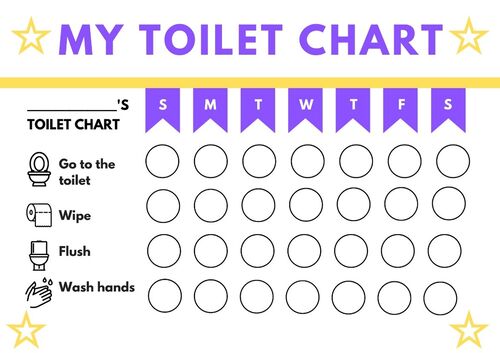
- You could trial a rewards chart such as stickers on a star chart
- Running a tap in the background can help with the sensation of needing to urinate
- Toilet toys that are small, such as fidgets or bubbles that are motivating, can be used when they are on the toilet; keep all toilet toys in the bathroom so child can develop an association between them and going to the toilet.
- Check the toilet height and seat, you may need to use a toilet insert so that they are well supported and feel safe sitting over the toilet, and the use of a stool so that their feet supported and hips above their knees to support bowel movements.
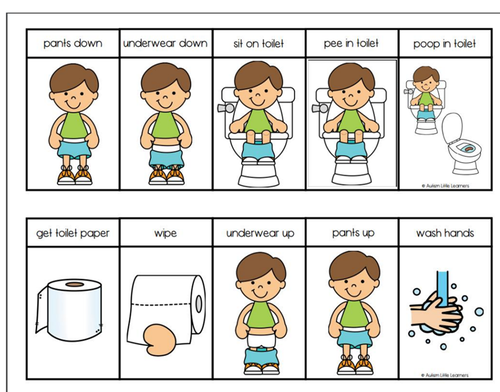
Source: Autism Little Learners (Home - Autism Little Learners), from their Free Toileting Sequence
Toileting needs to be a positive experience
Praise and rewards are helpful. Think of what would work best with your child.
- If using a Star chart, introduce it only when you have a routine established.
- Make sure the reward caters for your child (for example, entering the bathroom may be enough for a star). You may need to try a variety of rewards to find the one your child best responds to. Keep rewards specific to the task and to the child. Rewards should be given immediately with positive specific feedback (for example: ‘great sitting on the toilet' and smiling).
- If your child struggles with following toileting steps, it might be helpful to focus on rewarding one achievement at a time, for example, when they complete step 1 correctly and consistently. You can then add in the following steps to the reward chart over time.
- Before implementing a reward chart consider what your reward will be (for example, going to a toy shop after toileting would not be sustainable). Maybe give time to completing an interest or something fun.
An example of a reward chart
Accidents happen
- Keep a calm tone in your voice, for example, ‘let’s try again’. Keep language minimal.
- Clean the child in the bathroom with minimum of fuss. It is useful to have an ‘accident pack’ containing new underwear, wipes, and rubbish bags to hand.
- Get the child to help mam or dad to bring soiled/ wet clothes to the washing machine.